
Name: Barbara Matias Kariri
Area of work: Directing, Screenwriting, Research
Program: Prêmios
Edition: 2026
City: Crato
State: CE
E-mail: [email protected]
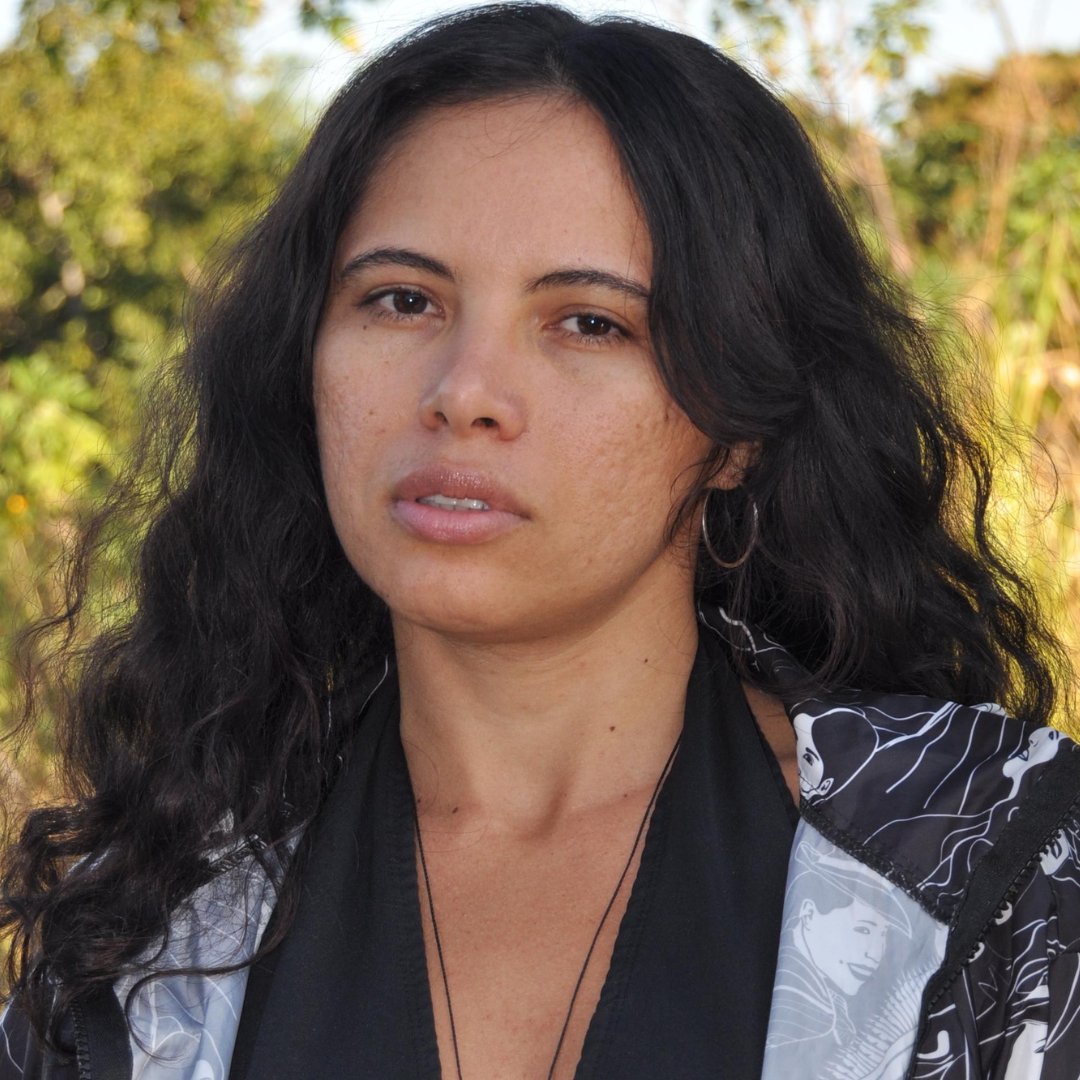
Born in 1993 in the Mareco community (Marrecas Village), in Lavras da Mangabeira, Ceará, she is an Indigenous artist from the Kariri people of the Cariri region in northeastern Brazil. Her practice moves between performing arts, audiovisual media, and writing. She holds a PhD in Performing Arts from the Federal University of Minas Gerais (UFMG) and is a member of the Flecha Lançada Arte Collective and the Katahirine Network of Indigenous Women in Audiovisual from Latin America. She also serves on the board of ABRA – the Brazilian Association of Screenwriters.
In 2022, she graduated in Screenwriting from the Cena 15 Laboratory at Porto Iracema das Artes, in Fortaleza, where she developed the Indigenous animated feature film “Dentro do Rio” (“Inside the River”). That same year, she participated in the sixth edition of LANANI – the Black and Indigenous Narratives for Audiovisual Laboratory, organized in partnership with Globo and FLUP. She currently works as a tutor at the Brotar Cinema Free School of Cinema and Audiovisual with the Anacé People, supported by Secult-CE. In 2023, she attended the course “Screenwriting: From Beginning to End, Passing Through the Middle,” led by director and screenwriter Jorge Furtado, as well as the Netflix Script Assistance Mentorship Program conducted by Andrea Yagui. In 2026, she participated in BrLab Audiovisual Project Development with “Dentro do Rio,” where the project received the participation award for Cinéma en Développement – Cine en Desarrollo at the Toulouse Film Festival, to be held in March 2027. The recognition also led to both the screenwriter and producer joining the Paradiso Talent Network.
She wrote and directed the documentaries “Aceso Fogo” (2021) and “Cardinal Ave e Maria” (2020/21), as well as the fiction films “Mãe Cajarana” (2018), “Uru’cu” (2017), “Corpo Memória Submersa” (2020), “O Que Me Leva Não É Moeda de Bolso” (2022), and “Desterro” (2023).
“Mãe Cajarana” was presented at the Amotara Showcase – Indigenous Women’s Perspectives in Cinema (2020). The screenplay for “Aceso Fogo” was developed through the Arribaçã Project under the Aldir Blanc Law (2020). In 2021, she competed in the [Em] Curtas Showcase with “Santa Pedra” and “Uru’cu.” “O Que Me Leva Não É Moeda de Bolso” and “Mãe Cajarana” screened at the ECHOES Indigenous Film Festival (2023), the Vienna Art Festival (2024), and Expo Osaka in Japan (2025). In 2025, she won the Best Director Award at the Ceará Voador Film Festival for “Faísca.”
In 2026, Barbara received an award at the BrLab to participate in Cinéma en Développement – Cine en Desarrollo and joined the Paradiso Talent Network.